Microneedling gets sold two ways that quietly contradict each other. One promises a glow after a single visit. The other talks about a course of treatments and results that keep building for months. Both descriptions are accurate, and the gap between them is the question this article answers.
The honest version is that the number of sessions depends on what you are treating. A patient chasing a brighter complexion before an event needs something very different from a patient working on years of acne scarring, and a good plan starts by naming which one you are.
If you are considering microneedling in Lexington, Louisville, and London, KY, here is how many sessions different concerns tend to take, and what changes that count for your own skin.
What does microneedling actually do?
Microneedling, known clinically as collagen induction therapy, uses a cluster of fine needles to create controlled micro-injuries in the skin. Each tiny channel is too small to leave a visible wound, yet your body still treats it as damage worth repairing. That repair response is the entire point of the treatment.
When the skin detects those channels, it releases growth factors and sends fibroblasts to rebuild the area, laying down fresh collagen and elastin over the following weeks. The result is firmer, smoother skin produced by your own tissue rather than anything injected or applied. A single session starts this process. A series sustains it long enough to produce lasting structural change.
This is why one appointment and a full course both deliver something real. The immediate glow after a single session comes largely from mild swelling and a surge of circulation, plus better absorption of whatever serum is used. The deeper remodeling that firms skin and softens scars only accumulates when the stimulus is repeated on a schedule.
What does a single session feel like, start to finish?
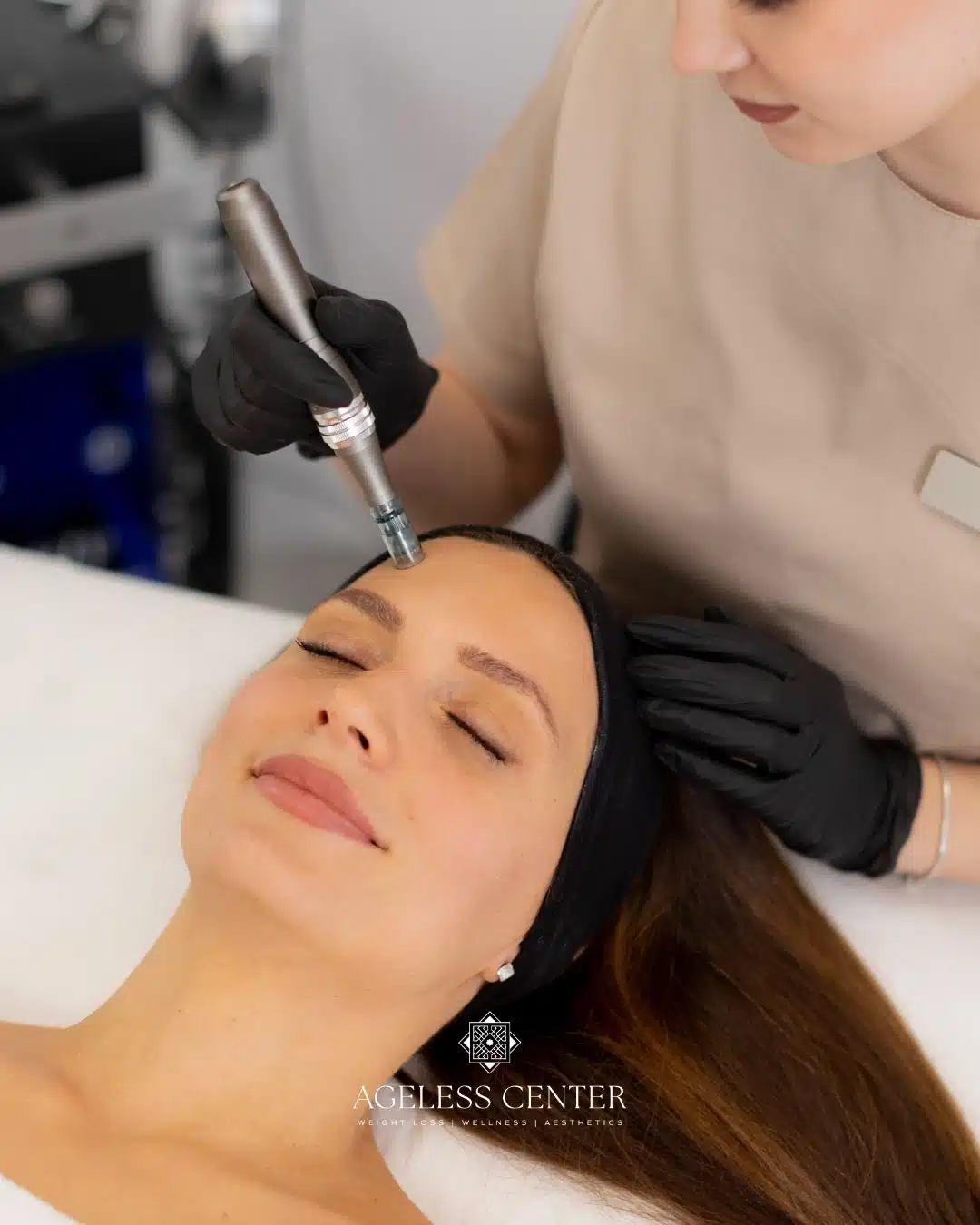
A visit starts with a cleanse and a layer of numbing cream, which sits for a short while so the treatment stays comfortable. Once the skin is ready, your provider passes the device across the area in overlapping paths, adjusting the needle depth for the region and the concern. The active part usually takes fifteen to thirty minutes for the face, depending on how much ground is covered.
Most patients describe a light prickling or a sandpaper feeling rather than real pain, strongest over bony spots like the forehead and jaw. Afterward the skin looks flushed, similar to a mild sunburn, and feels warm and tight for the rest of the day. A calming serum and sun protection go on before you leave, the redness generally fades within a day or two, and any dryness or light flaking clears over the following few days.
What the research shows In a large prospective study of 120 patients with a range of facial and non-facial scars, more than 80 percent achieved at least 50 percent improvement after a course of microneedling, and roughly 65 percent improved by more than 75 percent (source). Results on that scale come from a planned series rather than a single visit. |
How many sessions does each concern take?
These ranges are a starting point rather than a promise. Your provider sets the exact number after seeing your skin, but the pattern below holds for most patients.
Concern | Typical course | Spacing |
|---|---|---|
Overall glow and radiance | 1 for an event, about 3 for lasting change | 4 to 6 weeks |
Texture and enlarged pores | 3 to 4 sessions | 4 to 6 weeks |
Fine lines and early aging | 3 to 4 sessions | 4 to 6 weeks |
Acne and other atrophic scars | 4 to 6 sessions, sometimes more | 4 to 6 weeks |
Stretch marks | 4 to 6 sessions | 6 to 8 weeks |
Uneven pigment, as part of a plan | 3 to 4 sessions | 4 to 6 weeks |
| Concern | Typical Course | Spacing |
|---|---|---|
| Overall glow and radiance | 1 for an event, about 3 for lasting change | 4 to 6 weeks |
| Texture and enlarged pores | 3 to 4 sessions | 4 to 6 weeks |
| Fine lines and early aging | 3 to 4 sessions | 4 to 6 weeks |
| Acne and other atrophic scars | 4 to 6 sessions, sometimes more | 4 to 6 weeks |
| Stretch marks | 4 to 6 sessions | 6 to 8 weeks |
| Uneven pigment, as part of a plan | 3 to 4 sessions | 4 to 6 weeks |
Why are sessions spaced weeks apart?
Collagen does not appear the day after your appointment. Fibroblasts take time to produce it, and the new collagen keeps maturing for weeks after each session. Treating again too soon interrupts a process that has not finished, and it raises irritation without adding benefit. Spacing sessions four to six weeks apart lets each round build on a base that has already healed and remodeled.
That interval is also why a rushed package of weekly treatments makes little sense. The skin sets the pace, and the pace is measured in weeks. A provider who spaces your sessions correctly is working with your biology rather than against it.
Why won’t a single session fix acne scars?
Atrophic acne scars are small depressions left where the skin failed to rebuild after inflammation. Correcting them means generating collagen where there has been a deficit for years, and that does not happen in one pass. The scar floor has to be lifted gradually as new collagen fills in beneath it.
Objective studies that biopsied skin before and after a course of six sessions found measurable increases in collagen, which matches what patients see in the mirror. Scars soften across a series rather than disappearing after a single treatment, and deeper scarring simply needs more rounds than faint surface texture does.
A quick rule of thumb For a one-time glow before an event, a single session is enough. For visible, lasting change in texture or tone, plan on three to four. For established acne scarring, expect four to six or more, spaced about a month apart. |
What changes the number for your skin?
Four factors move the count up or down:
- Your age and baseline collagen. Younger skin tends to respond faster and may need fewer rounds, while mature skin often benefits from a longer course.
- The severity and age of the concern. Faint texture clears quicker than deep, long-standing scarring.
- The depth of the treatment. Deeper needling reaches more of the dermis and can do more per session, within the limits your provider sets for safety.
- What you do afterward. Sun protection and a steady routine protect each gain, while daily unprotected sun exposure works directly against it.
Does the needle depth change how many sessions you need?
Depth is one of the levers your provider adjusts, and it does influence the count. Shallow settings mainly refresh the surface and boost product absorption, which suits glow and mild texture but does little for deep scarring. Reaching further into the dermis triggers a stronger collagen response per session, so deeper concerns can progress with fewer visits than a run of shallow passes would allow.
There is a ceiling on that logic. Deeper is not automatically better, and pushing too far raises downtime and risk without a matching payoff. A skilled provider matches the depth to the target, using firmer settings on established scars and lighter ones on delicate areas, which is a large part of why in-office treatment outperforms a one-size home device.
Does microneedling work on the body too?
It does, and body treatment follows the same logic as the face with a couple of adjustments. Stretch marks on the abdomen or thighs, older surgical scars, and crepey skin all respond to the same collagen-building stimulus, though body skin is thicker and slower to remodel than facial skin. In practice that means a slightly longer course and wider spacing between sessions.
Expect body areas to reward patience. The collagen turnover that softens a stretch mark takes months, and the result builds gradually across a series rather than appearing after one pass. Your provider sets a realistic number of sessions for the specific area, since a forearm scar and a stretch mark across the hips are not the same job.
Do add-ons change how many sessions you need?
Microneedling is often combined with a boost that amplifies the same healing response. Adding your own platelet-rich plasma delivers concentrated growth factors into the channels, which is the idea behind microneedling with PRP in Kentucky. Microneedling with exosomes in Kentucky uses signaling material to push the repair response further still. These pairings tend to deepen the result of each session more than they slash the total you need, though some patients reach their goal in a slightly shorter course.
For laxity and deeper structural concerns, radiofrequency energy delivered through the needles reaches further than needles alone. RF microneedling in Kentucky and Morpheus8 in Kentucky work in a different tier for that reason, and our explainer on what Morpheus8 does for the face covers where that line sits. A consultation is the cleanest way to learn whether standard microneedling will meet your goal or whether an energy-based option fits better.
When will you see results, and how long do they last?
Expect a fresh, slightly flushed glow within the first several days, then a quieter stretch while collagen builds beneath the surface. The visible payoff from a full course tends to land around three to six months after you start, since the final session keeps working for weeks after you leave the chair.
Results are durable without being permanent, because skin keeps aging. Many patients return for a single maintenance session every few months to hold what they built, supported by a consistent medical-grade skincare routine at home.
Can microneedling be combined with peels or facials?
Microneedling sits comfortably alongside other resurfacing work when the timing is planned. A medical-grade chemical peel handles surface pigment and dullness while microneedling rebuilds from deeper down, and providers usually stagger the two rather than stacking them in one visit. The priority is not overloading the skin, so the schedule is set with recovery in mind.
Dermaplaning fits into the picture as well, clearing the surface so topical products absorb better between microneedling rounds. The guiding rule across all of these pairings is spacing. Each treatment asks something of the skin, and lining them up with enough recovery in between is what keeps a smart plan from tipping into irritation. Your provider sequences them so every treatment lands when your skin is actually ready for it.
Frequently asked questions
How many microneedling sessions will I need?
Most concerns take a course of three to six sessions spaced four to six weeks apart. A single session gives a temporary glow, while lasting change in texture, tone, or scarring needs the full series. Your provider sets the number after assessing your skin.
How far apart should sessions be?
Usually four to six weeks. That interval gives the collagen from each session time to form and mature, so the next round builds on a healed base rather than interrupting one that is still in progress.
Is one session ever enough?
For a short-lived glow before an event, yes. For lasting improvement in texture, fine lines, or scars, no. The structural change that patients want from microneedling comes from repeated stimulation over a course.
When will I see results?
A fresh glow shows within days. The deeper result from a full series builds over the following months and tends to peak three to six months after you begin, as the last session keeps working.
How long do the results last?
Improvements can hold for months to a year or more, especially with maintenance sessions and good sun protection. Because aging continues, most patients treat microneedling as an ongoing routine rather than a one-time fix.
Does microneedling hurt?
A numbing cream is applied first, and most patients describe a mild prickling sensation rather than pain. Expect some redness afterward that looks like a light sunburn and usually settles within a day or two.
Can I microneedle at home with a roller?
At-home rollers reach only a fraction of the depth used in a professional treatment and carry a real risk of infection without medical-grade sterility. For actual collagen remodeling, an in-office device in trained hands is the safer and more effective choice.
Ready to plan your sessions?
The right number of treatments depends on your skin and your goal, and the cleanest way to learn it is a consultation. At Ageless Center, a provider examines your skin, names what is realistic, and builds a course that fits the concern you actually want to address.
We treat patients at our Lexington, Louisville, and London, KY locations.
Schedule your consultation to map out how many sessions your skin really needs.