Peptide therapy has become one of the fastest-growing segments of anti-aging medicine. Walk into any wellness clinic, scroll through any longevity-focused social media account, and you’ll encounter claims about peptides that can regenerate tissue, reverse aging, sharpen cognitive function, and restore the vitality of someone half your age.
Some of those claims have legitimate science behind them. Others are extrapolated well beyond what the data supports. And the regulatory landscape has shifted significantly over the past two years, making it harder to separate credible treatments from unregulated products sold on the internet.
If you’re considering peptide therapy in Lexington, Louisville, or London as part of an integrative health approach in Kentucky, this is what the current evidence says, where the gaps are, and how to make informed decisions about what’s worth pursuing.
What are peptides
Peptides are short chains of amino acids, typically between 2 and 50 amino acids in length. They function as signaling molecules in your body, telling cells what to do: produce more collagen, release growth hormone, reduce inflammation, repair tissue. Your body produces thousands of peptides naturally, and their production declines with age.
The concept behind peptide therapy is straightforward. If declining peptide levels contribute to the visible and functional signs of aging, then replacing or supplementing those peptides should, in theory, help counteract some of those effects.
Some peptides have been studied rigorously in human trials. Others have impressive animal data but almost no controlled human research. And a few have been effectively removed from regulated clinical use by FDA enforcement actions, despite widespread consumer demand.

The peptides with the strongest anti-aging evidence
GHK-Cu (copper peptide): This naturally occurring tripeptide is one of the most studied peptides in the context of skin aging. GHK-Cu levels in the body decline significantly after age 20. Research published in BioMed Research International has shown that GHK-Cu activates over 4,000 human genes, many of which are involved in collagen synthesis, antioxidant defense, and DNA repair. In topical form, it has been shown to improve skin firmness, reduce fine lines, and accelerate wound healing in controlled human studies.
The catch: most of this strong human data is for topical application, not injectable forms. Injectable GHK-Cu was available through compounding pharmacies until the FDA restricted its compounding in 2023. Topical GHK-Cu serums, however, remain widely available and are supported by peer-reviewed research.
Sermorelin
A growth hormone-releasing peptide that stimulates the pituitary gland to produce more of your own growth hormone (GH). Unlike synthetic growth hormone itself, which carries significant risks when used without a genuine deficiency, sermorelin works within your body’s natural feedback loops. It encourages GH secretion without overriding the pituitary’s regulatory mechanisms.
Growth hormone affects nearly every tissue in the body, and its decline is a well-documented contributor to age-related changes in body composition, sleep quality, skin thickness, and recovery capacity. Sermorelin has been FDA-approved as a diagnostic agent and has a longer clinical history than most peptides in the anti-aging space.
CJC-1295 / Ipamorelin
This combination is frequently used in anti-aging protocols to enhance growth hormone secretion. CJC-1295 extends the half-life of growth hormone-releasing hormone, while ipamorelin mimics ghrelin to stimulate GH release. Together, they produce a more sustained and physiologic elevation of growth hormone compared to single agents.
For patients interested in optimizing body composition, sleep, and recovery, GH-secretagogue peptides are often paired with hormone replacement therapy for men or women’s hormone therapy in Lexington and Louisville for a more comprehensive approach to age-related hormonal decline.
The peptides with strong animal data but limited human proof
BPC-157 (Body Protection Compound)
This is probably the most talked-about peptide in wellness circles, and it’s also one of the most frustrating from an evidence standpoint. Rodent studies have consistently shown that BPC-157 accelerates healing in skin, muscle, tendons, ligaments, nerves, bones, and the GI tract. The breadth of its effects in animal models is remarkable.
But human evidence remains extremely thin. A 2026 review published in Frontiers in Aging noted that clinical data amounts to a handful of pilot studies and observational reports, none of which included placebo controls or randomization (source). BPC-157 is not FDA-approved for any clinical use, and the FDA has restricted its availability through compounding pharmacies.
TB-500 (Thymosin Beta-4)
Another peptide with impressive wound-healing and anti-inflammatory effects in preclinical research. Like BPC-157, it promotes angiogenesis (new blood vessel growth) and tissue repair in animal models. It’s prohibited by WADA for athletic competition and is not FDA-approved.
A word of caution: The popularity of BPC-157 and TB-500 has outpaced the evidence. US customs data shows that imports of peptide compounds from China reached $328 million in the first three quarters of 2025 alone, roughly double the prior year. Much of this product enters the US through unregulated channels with no quality assurance. |
How peptide therapy fits into a broader anti-aging strategy
Peptides are not a standalone solution to aging. They work best as one component within a broader, medically supervised program that also addresses hormonal balance, metabolic health, skin quality, and body composition.
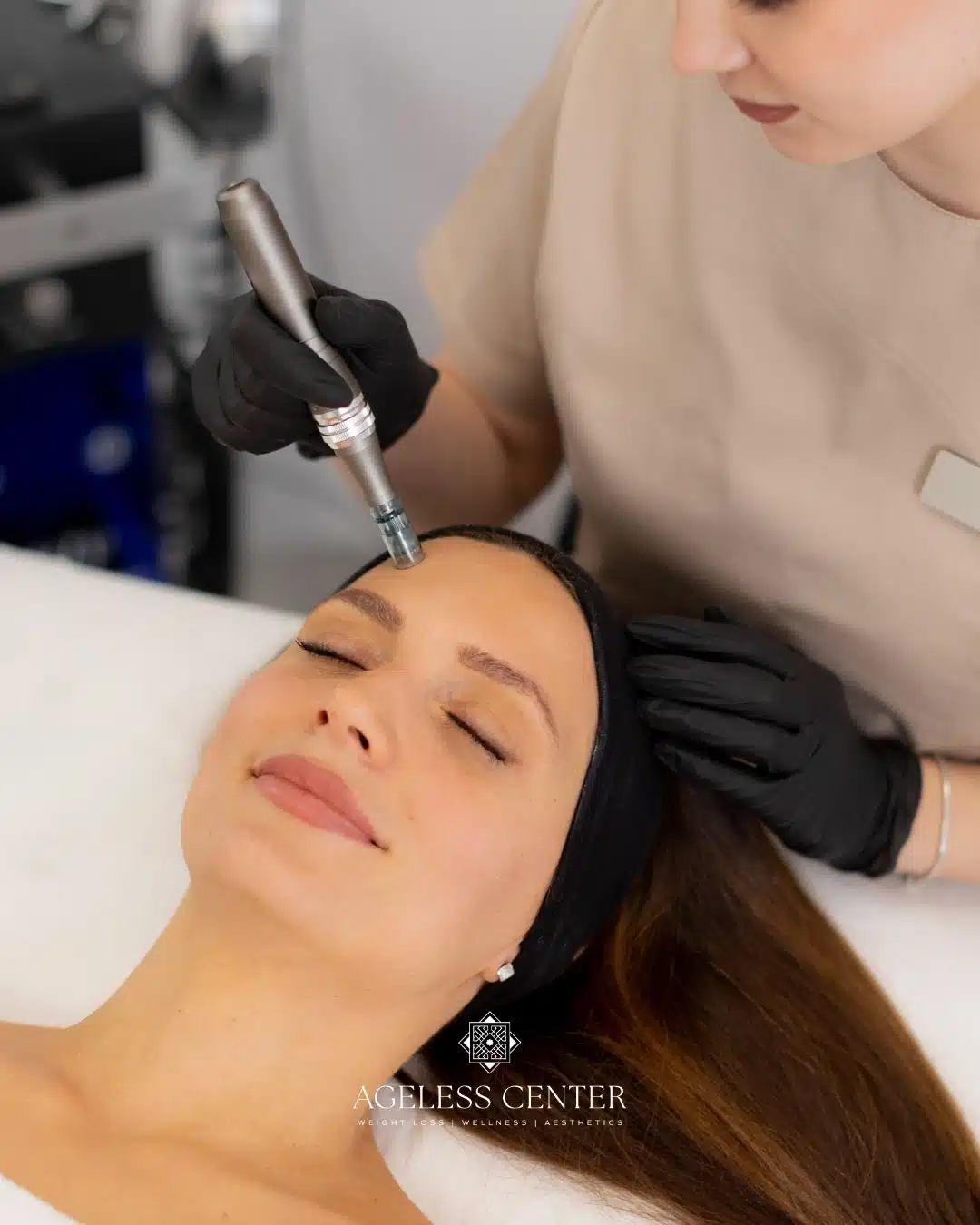
For many patients at Ageless Center, peptide therapy complements other interventions. Someone using sermorelin for growth hormone optimization might also be on medically supervised weight loss to address metabolic function. A patient using topical GHK-Cu for skin quality might also benefit from microneedling with exosomes to enhance collagen remodeling from the surface level.
The point is that no single peptide reverses aging. But the right combination of interventions, tailored to your biology and your goals, can meaningfully slow several of the processes that drive it.
What to look for in a peptide therapy provider
The peptide market is flooded with direct-to-consumer products of uncertain quality and origin. If you’re considering peptide therapy, the provider you choose matters as much as the peptide itself.
- Source and purity: Peptides should come from FDA-registered compounding pharmacies that follow current Good Manufacturing Practices (cGMP). Products sourced from overseas or purchased online without a prescription carry real contamination risks.
- Medical oversight: Peptide protocols require baseline lab work, monitoring, and dose adjustments. A provider who prescribes peptides without reviewing your bloodwork or medical history isn’t practicing responsible medicine.
The role of collagen-supporting treatments
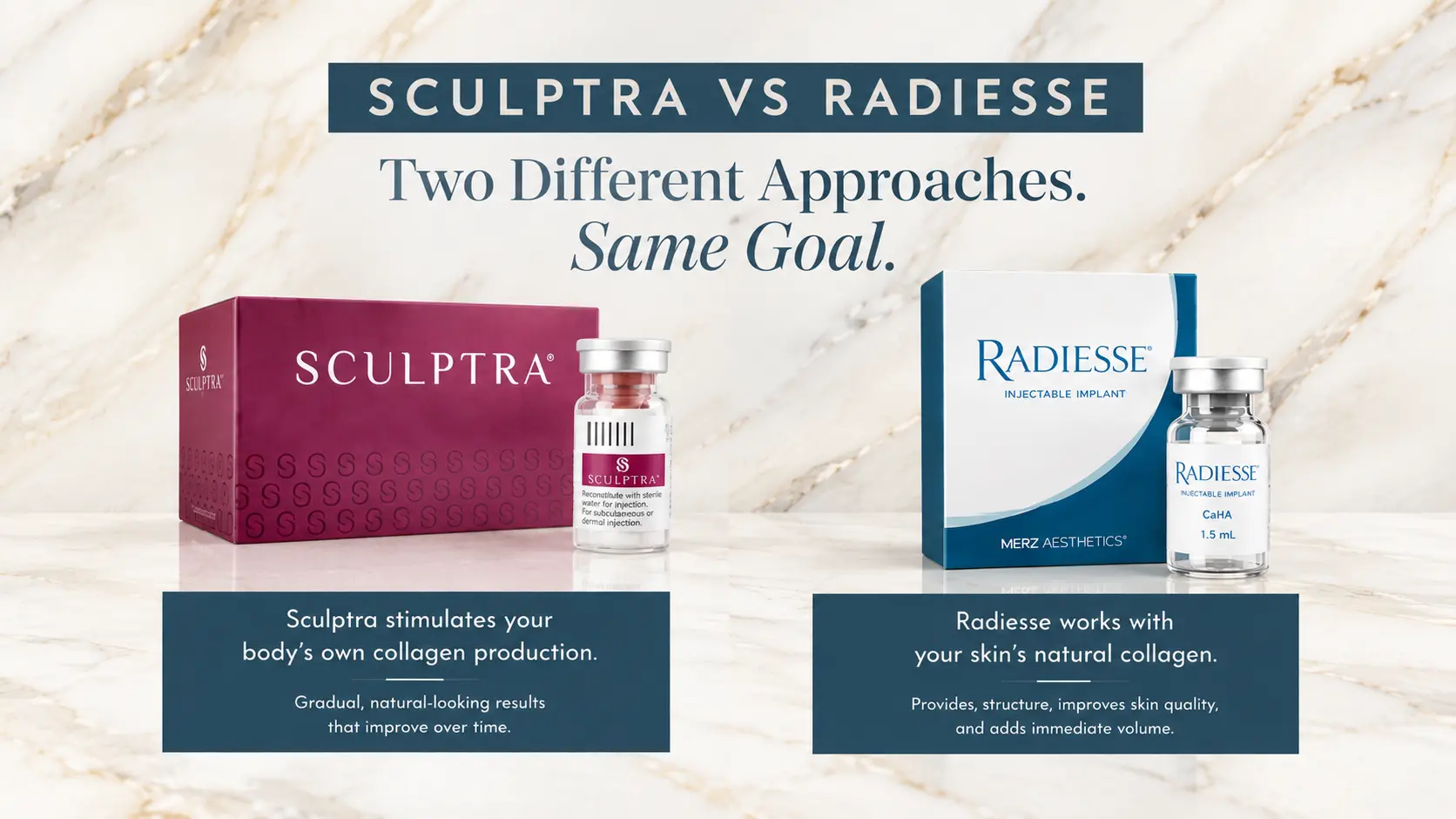
One of the most practical applications of anti-aging science isn’t a peptide you inject. It’s stimulating your body’s own collagen production through clinical treatments. Sculptra injections in Lexington, Louisville, and London use poly-L-lactic acid to trigger collagen synthesis in the face. RF microneedling and Morpheus8 treatments deliver radiofrequency energy deep into the dermis to remodel collagen and elastin.
For patients focused on visible skin aging, these treatments have the advantage of strong clinical evidence, FDA clearance, and predictable results. They’re a practical complement to systemic peptide protocols, and many patients use them in combination with Radiesse for collagen stimulation or medical-grade skincare to address the skin from multiple angles.
Separating signal from noise
The anti-aging peptide space suffers from a gap between enthusiasm and evidence. Social media has amplified testimonial-driven claims far beyond what controlled research has established.
That doesn’t mean peptide therapy is without merit. It means that patients and providers alike need to be precise about which peptides have human data behind them, which are still in the animal-study phase, and which are being sold on hype alone.
Peptide | Primary use | Human evidence | Availability |
GHK-Cu (topical) | Skin repair, collagen, wound healing | Strong (topical) | Widely available |
Sermorelin | Growth hormone optimization | Established | Available via Rx |
CJC-1295/Ipamorelin | GH secretion, body composition | Moderate | Available via Rx |
BPC-157 | Tissue repair, gut healing | Very limited (animal-heavy) | Restricted (FDA) |
TB-500 | Wound healing, inflammation | Very limited | Restricted (FDA/WADA) |
Where to start
If you’re curious about peptide therapy, start with a conversation, not a purchase. A qualified provider will review your labs, your health history, and your specific goals before recommending any peptide protocol. At Ageless Center, peptide therapy is part of our broader integrative health services, and we approach it with the same clinical rigor we apply to hormone therapy and weight management programs.
To explore whether peptide therapy is appropriate for you, schedule a consultation at our Lexington, Louisville, or London, KY location. We’ll help you figure out what makes sense for your body and where you are in the process.